
Walk through any food plant, beverage facility, or cosmetics workshop these days, and you’ll notice a workhorse keeping production moving: automatic glass bottle filling machines. They’ve become indispensable on factory floors, trusted to handle everything from juice bottles to perfume vials with speed, accuracy, and care. And among these machines, the ones using rotary metering?
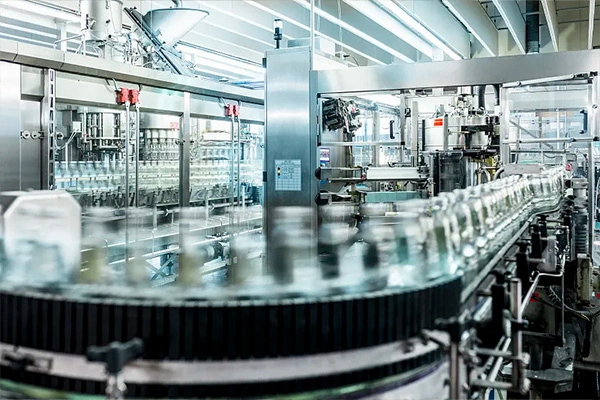
General Features of Automatic Glass Bottle Filling Machine
High-Precision Filling for Consistent Quality
These glass bottle filling machines typically use high-precision flow meters, servo control systems, or volumetric pumps to ensure every glass bottle gets exactly the same fill volume.
Full Automation for Peak Efficiency
From empty bottles entering the line to filling, capping/sealing, labeling, and final product output, the entire process runs automatically with no manual intervention.
Hygienic Design and Premium Materials
For products like beverages, sauces, and high-end cosmetics, all parts touching materials are made from 316 or 304 stainless steel, meeting GMP, FDA, and other hygiene standards. Many models include CIP and SIP systems, making thorough cleaning and disinfection quick and easy—eliminating cross-contamination risks and ensuring product safety.
Flexible Adaptability to Different Bottle Types
By swapping a few components, a single machine can handle glass bottles of varying heights, diameters, and shapes.
User-Friendly Operation and Smart Controls
Modern machines come with large HMI touchscreens, letting operators easily set parameters, monitor performance, check production data, and diagnose issues.
Unique Advantages of Rotary Metering Filling Machines
Rotary metering filling is a highly efficient, mature technology in automatic filling. Here’s how it works: Filling valves are mounted on a continuously rotating turntable. Glass bottles are fed into the turntable via screws and star wheels, then rotate with the turntable to complete positioning, lifting, filling, and lowering in one full rotation before exiting the line.
Continuous Motion for Maximum Efficiency
Unlike linear filling machines, which stop and start intermittently, rotary systems operate continuously. Bottles are filled while moving, eliminating inertia-related delays from frequent stops—enabling higher speeds and significantly better efficiency.
Compact Design Saves Floor Space
Rotary machines integrate multiple stations into a single rotating platform, taking up less space than linear setups. This is a major advantage in crowded production facilities where space is valuable.
Smooth Operation Reduces Wear
Steady, continuous rotation is gentler on components than the constant starts and stops of linear systems. This reduces mechanical wear, lowers failure rates, extends equipment life, and cuts down on noise.
Precise Metering with Drip-Free Performance
Rotary filling valves use gravity, pressure, or servo-pump metering. Advanced valve designs ensure tight seals with bottle mouths, opening to fill and closing without drips—maintaining accuracy while keeping the machine and workspace clean.
Easy Integration with Other Processes
Rotary turntables seamlessly connect to other rotary equipment, forming a cohesive, efficient production line that streamlines the entire manufacturing process.